ISO 9001 remains one of the most widely adopted management system standards worldwide. Yet despite its maturity, organisations continue to struggle with audits, surveillance reviews and sustained compliance. The issue is rarely a lack of intent or policy. More often, it is a failure to translate the standard’s requirements into operational control that stands up to scrutiny.
In recent years, this gap has widened. Workforces have become more fluid, skills have shifted faster, and regulatory expectations around evidence and accountability have intensified. As a result, ISO 9001 audits today look very different from those conducted a decade ago. Auditors increasingly expect organisations to demonstrate live control of competence, process ownership and performance, rather than retrospective documentation assembled purely for inspection.
This guide examines the application of ISO 9001 in practice today. It examines why audits fail, what the standard truly expects beyond formal compliance, and how organisations can build audit readiness that is continuous rather than reactive. It also explains where digital competence systems, including Moralbox, legitimately support ISO 9001 without overclaiming or replacing a Quality Management System.
TABLE OF CONTENTS
- Why ISO 9001 still matters in a changing operating environment
- What ISO 9001 actually requires, beyond theory
- Why ISO 9001 audits fail in real organisations
- Competence as the hidden backbone of ISO 9001
- Audit readiness versus audit survival
- The role of digital competence systems in ISO 9001
- Where Moralbox fits within ISO 9001
- ISO 9001 is an operational discipline, not a certificate
- FAQs
- References
Why ISO 9001 still matters in a changing operating environment
At its core, ISO 9001 is about consistency. It requires organisations to demonstrate that they can reliably deliver products or services that meet customer and regulatory requirements while continually improving how they operate (International Organization for Standardization, 2015). That principle has not changed.
However, organisations have applied ISO 9001 in a markedly different environment since 2020. Organisations increasingly rely on contractors, temporary staff and multi-skilled roles. Knowledge now changes more rapidly, and organisations can no longer assume that competence remains valid over time. Research published after 2022 reinforces this reality. The World Economic Forum reports that approximately 39% of current workforce skill sets will change by 2030, driven by technological adoption, economic pressures and organisational restructuring (World Economic Forum, 2025).
These changes directly affect quality outcomes, even when documented processes appear stable. Consequently, ISO 9001 has become less about written procedures and more about how organisations manage capability in real operating conditions. Auditors now expect evidence that people are competent, current and effective in their roles, not simply that training has taken place.
What ISO 9001 actually requires, beyond theory
Many organisations still misinterpret ISO 9001 as a documentation standard. In reality, documentation exists to support control, not to replace it. The standard requires organisations to design, implement and maintain processes that are effective, measurable and subject to continual improvement (International Organization for Standardization, 2015).
Several clauses directly shape this discussion and operate as part of an integrated system rather than in isolation. Clause 7.2 on competence requires organisations to define the competence needed for work that affects quality, ensure individuals achieve that competence, and evaluate whether those actions deliver effective performance. Guidance from the ISO Auditing Practices Group further emphasises that organisations must assess competence based on its impact on process performance and quality outcomes, not simply on the completion of training activities (International Organization for Standardization, 2023).
This emphasis on evidence extends across the standard. Clause 7.5 requires documented information to be controlled so that it remains accurate, current and accessible. Clause 9 requires organisations to conduct internal audits and performance evaluations that are evidence-based and reflective of operational reality.
When read together, these requirements make one expectation clear. ISO 9001 does not ask whether training exists. It asks whether the organisation can demonstrate, at any point in time, that its people are capable of performing their roles effectively and under controlled conditions.
| ISO 9001 focus area | What the standard expects in practice | What commonly happens | Why does this create audit risk |
|---|---|---|---|
| Competence (Clause 7.2) | Defined role-based competence, evaluated for effectiveness and kept current | Training recorded once, rarely reviewed | Why this create audit risk |
| Documented information (Clause 7.5) | Controlled, current and accessible evidence | Records scattered across spreadsheets and systems | Evidence is inconsistent or outdated |
| Internal audits (Clause 9.2) | Evidence-based evaluation of system effectiveness | Tick-box audits focused on compliance | Weak issues remain hidden until external audits |
| Performance evaluation | Ongoing monitoring and improvement | Reactive reporting before audits | Organisations cannot prove people are competent at the time of the audit |
Why ISO 9001 audits fail in real organisations
Despite decades of implementation experience, many organisations continue to struggle during ISO 9001 audits. These failures are rarely dramatic or intentional. Instead, they emerge gradually as systems lose alignment with how work is actually performed.
A common pattern is the reliance on static training records. Training may be delivered, recorded and filed away, but never revisited. Over time, roles evolve, processes change, and standards update, yet competence records remain unchanged. When auditors ask how competence has been reviewed or refreshed, organisations often struggle to provide convincing evidence.
Another recurring issue is fragmentation. Competence data frequently sits across spreadsheets, learning management systems, email trails and shared drives. Individually, these records appear adequate. Collectively, they fail to present a coherent, auditable picture. During audits, this fragmentation becomes visible and often results in non-conformities or observations.
There is also a tendency to treat audits as events rather than as outcomes of ongoing control. Evidence is gathered shortly before the audit, often under pressure, rather than maintained as part of normal operations. This reactive approach undermines confidence and increases risk, even in organisations with otherwise mature quality systems.
Competence as the hidden backbone of ISO 9001
Although ISO 9001 is frequently discussed in terms of processes, competence is the mechanism through which those processes function in practice. A well-designed process will still fail if the people executing it lack the necessary skills, understanding or experience at the point of use.
The requirement to evaluate the effectiveness of competence actions is particularly significant. Effectiveness implies more than attendance. It requires organisations to consider whether training or experience has genuinely enabled individuals to perform their roles as intended. This expectation has gained prominence as regulators and certification bodies place increasing emphasis on organisational capability and human factors (International Organization for Standardization, 2023).
Broader workforce research reinforces this focus. The World Economic Forum’s Future of Jobs reports highlight sustained skill disruption across industries, indicating that competence cannot be treated as a one-off achievement but must be actively managed over time (World Economic Forum, 2023; World Economic Forum, 2025). In this context, competence becomes a living attribute rather than a historical record.
👉 Suggested reading: Construction Safety, Training and Competence: Why Visibility Is the Control the Industry Is Missing
Explores how competence gaps remain invisible in complex organisations and explains why real-time visibility, rather than static records, is essential for controlling risk and meeting audit expectations.
Audit readiness versus audit survival
There is a clear distinction between organisations that survive audits and those that are genuinely audit-ready. Survival relies on short-term effort concentrated around audit windows. Audit readiness, by contrast, reflects a state in which evidence is continuously available because systems are under control.
Audit-ready organisations can demonstrate how competence requirements are defined, how individuals meet those requirements, and how changes are managed. Internal audits play a critical role in sustaining this state by identifying weaknesses early rather than merely satisfying formal requirements.
This distinction has become more pronounced as audit expectations evolve. Certification bodies have noted a growing emphasis on consistency over time, with surveillance audits focusing increasingly on how organisations maintain control between audit cycles rather than how they prepare immediately before an assessment (British Standards Institution, 2025).

👉 Suggested reading: How Training Needs Analysis Prevents Compliance Surprises Before Audits
Examines how proactive Training Needs Analysis helps organisations identify competence gaps early, reduce last-minute audit pressure and maintain continuous compliance.
The role of digital competence systems in ISO 9001
As expectations around evidence and traceability increase, many organisations are reassessing how they manage competence. Digital systems can play an important supporting role when implemented with a clear understanding of their purpose and limitations.
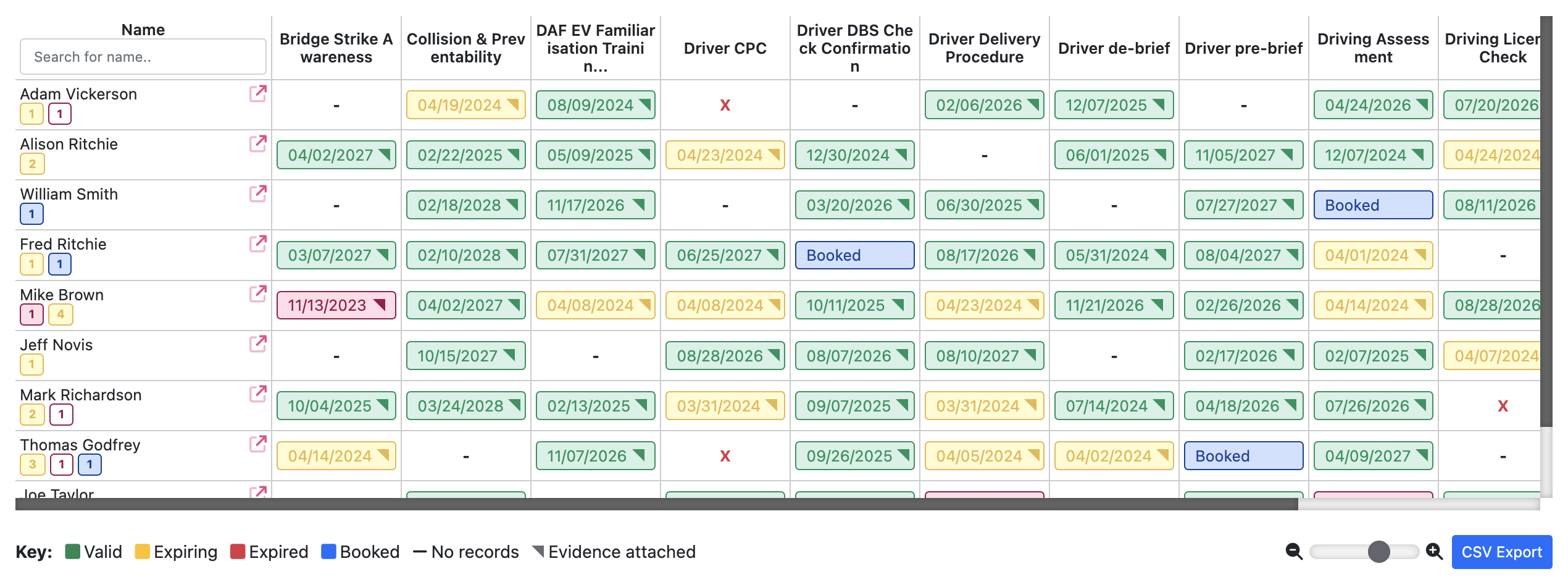
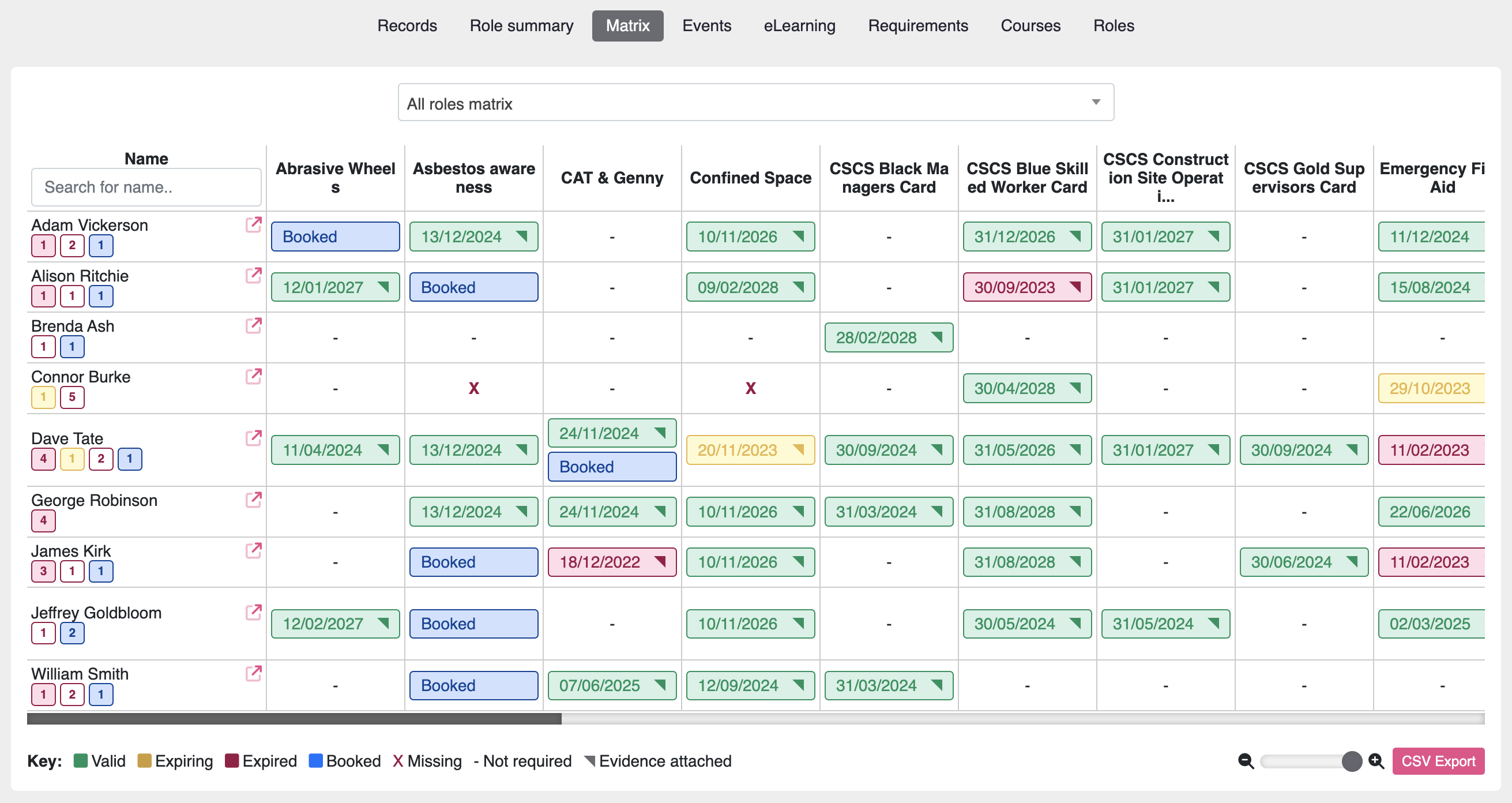
A well-designed competence system can centralise role requirements, track training and assessment outcomes, manage expiry and renewal, and provide real-time visibility. Crucially, it can support internal audits by making evidence accessible and current rather than dispersed and outdated.
Such systems do not replace a Quality Management System. Instead, they support it by strengthening one of its most vulnerable elements. When implemented appropriately, digital competence tools reduce administrative burden, improve audit confidence and help organisations move from reactive compliance to proactive control.
Where Moralbox fits within ISO 9001
Moralbox supports ISO 9001 by strengthening competence management and audit evidence, particularly in relation to Clause 7.2 on competence and the performance evaluation requirements under Clause 9. It enables organisations to define competence at role level, track how individuals meet those requirements, and maintain evidence that reflects current operational reality.
Importantly, Moralbox does not claim to be ISO 9001 compliant in itself, nor does it replace a Quality Management System or guarantee certification. Instead, it integrates into existing quality frameworks, complementing document control systems, internal audit processes and management reviews.
Organisations typically use Moralbox to gain visibility across their workforce, reduce reliance on spreadsheets, and maintain audit-ready competence records. In doing so, they address one of the most common and persistent weaknesses identified during ISO 9001 audits.
ISO 9001 is an operational discipline, not a certificate
Ultimately, ISO 9001 is not about achieving a certificate. It is about building confidence that quality outcomes are controlled, repeatable and capable of improvement. In today’s operating environment, that confidence depends heavily on how organisations manage competence and evidence over time.
Standards will continue to evolve, but the underlying expectation remains consistent. Organisations must understand their processes, their people and the relationship between the two. Systems that support this understanding, without overstating their role, help sustain both compliance and performance.
Moralbox fits into this landscape as an enabler of operational discipline. By supporting competence management and audit readiness, it helps organisations meet ISO 9001 expectations in practice rather than merely on paper.
FAQs
1. Is ISO 9001 mainly about documentation or about how work is actually performed?
Although documentation remains important, ISO 9001 increasingly focuses on how work is carried out in practice. Therefore, auditors look beyond policies and procedures to assess whether processes operate effectively and whether people are competent at the time tasks are performed.
2. Why do organisations with ISO 9001 still struggle during audits?
In many cases, organisations struggle not because systems are absent, but because they rely on outdated or fragmented evidence. As a result, competence cannot be demonstrated consistently, and consequently, audits become exercises in explanation rather than confirmation of control.
3. How can organisations remain audit-ready between ISO 9001 surveillance audits?
Rather than preparing only before an audit, organisations should maintain live visibility of competence, roles and evidence. In doing so, internal audits become more effective, and therefore, surveillance audits validate existing control instead of uncovering gaps.
References
British Standards Institution (2025) The ISO 9001 revision: a new era for quality management. Available at: https://www.bsigroup.com/en-US/insights-and-media/insights/blogs/the-iso-9001-revision-a-new-era-for-quality-management/ (Accessed: 24 December 2025).
International Organization for Standardization (2015) ISO 9001:2015 Quality management systems – Requirements. Geneva: ISO.
International Organization for Standardization (2023) Auditing practices group guidance on competence. ISO/TC 176. Available at: https://committee.iso.org/files/live/sites/tc176/files/PDF%20APG%20New%20Disclaimer%2012-2023/ISO-TC%20176-TF_APG-Competence.pdf (Accessed: 24 December 2025).
World Economic Forum (2023) The future of jobs report 2023. Geneva: World Economic Forum.
World Economic Forum (2025) The future of jobs report 2025. Geneva: World Economic Forum. Available at: https://www.weforum.org/publications/the-future-of-jobs-report-2025/ (Accessed: 24 December 2025).
World Economic Forum (2025) Skills outlook. In: The future of jobs report 2025. Geneva: World Economic Forum. Available at: https://www.weforum.org/publications/the-future-of-jobs-report-2025/in-full/3-skills-outlook/ (Accessed: 24 December 2025).

Ananya is a Marketing Executive at Moralbox, passionate about creating content that connects learning with business impact.